
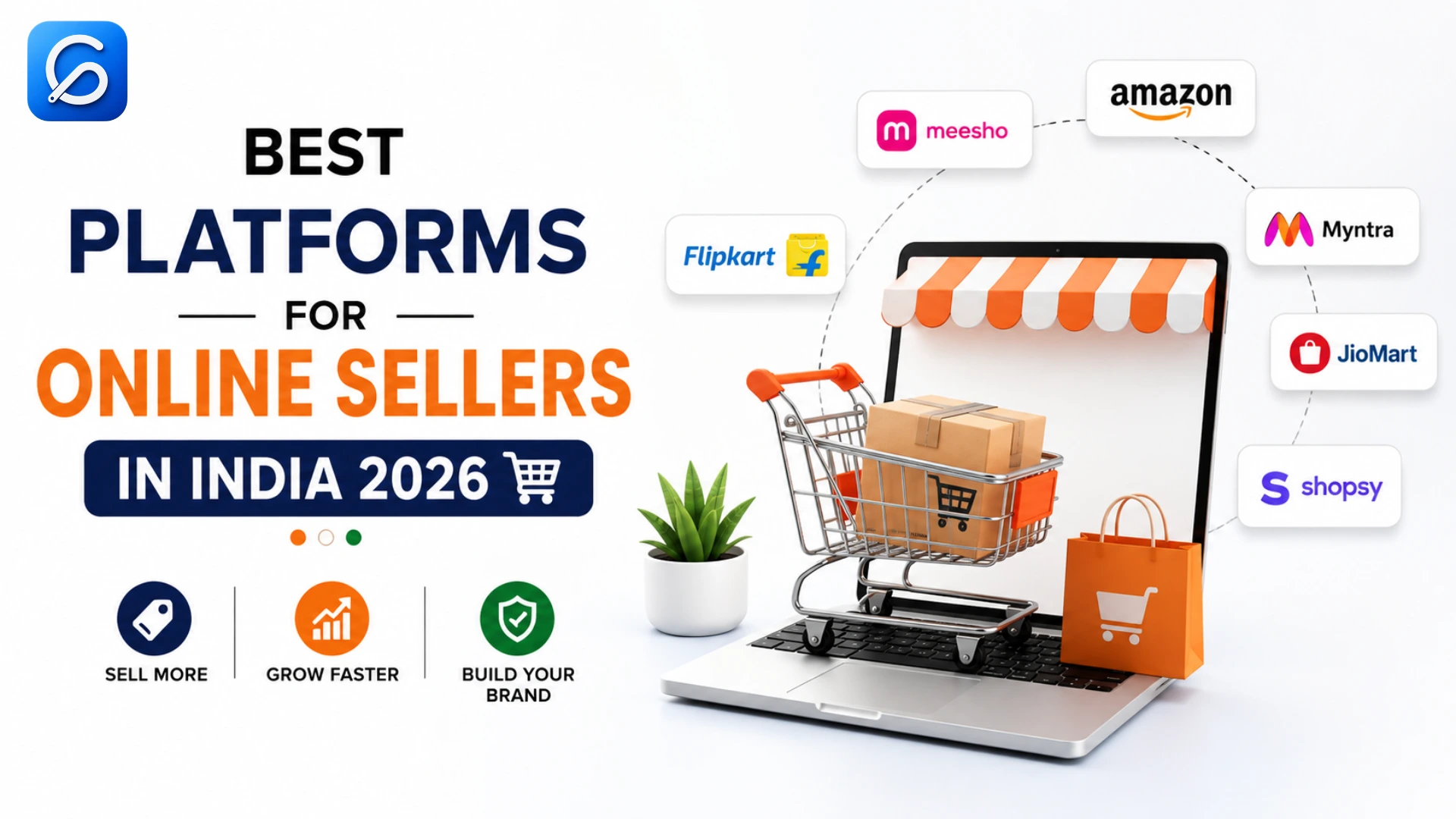
Here’s what happens when most people research selling online in India: they find 40 articles saying “just use Amazon” or “Shopify is the future”—and walk away more confused than before.
This guide is different. We’ve compared the best platforms for online sellers in India across 6 major selling models, with real fee numbers, honest margins, and a clear verdict on who each one is actually built for.
Quick answer: There is no single best platform. There’s a best platform for your situation. If you’re starting with limited capital and want to sell premium brands today, GridRay’s authorized zero-inventory model gives you the fastest path to ₹1L/month without tying up a rupee in stock.
In this guide:
- Real 2026 fee breakdowns for Amazon, Flipkart, and Meesho
- Why ONDC is the sleeping giant most sellers are ignoring
- The D2C truth: great margins, brutal CAC
- How authorized zero-inventory reselling beats dropshipping
- A side-by-side table covering every major factor
- FAQ: answers to the questions sellers actually search for
Why GridRay keeps coming up in this comparison: every other option on this list makes you gamble capital on inventory before you know it’ll sell. GridRay flips that order—you list first, pay dealer price only after the customer orders, and keep 30–50% margins on 100% authorized brands. Same-day dispatch from the brand warehouse, zero dead stock, zero upfront risk.
1. Amazon India
Built for: Scale-hungry sellers with established supply chains
Amazon India crossed 200M registered customers in 2025. The traffic is real. But the fee story changed significantly in early 2026.
The 2026 fee reset: Amazon announced zero referral fees on products priced under ₹1,000 across 1,800+ categories—a structural shift affecting 12.5 crore listings. For fashion, accessories, home goods, and fitness products under ₹1,000, this dramatically changes the math.
For products above ₹1,000, referral fees still apply:
| Category | Referral Fee |
|---|---|
| Electronics | 2–7% |
| Sports & Fitness | 4–10% |
| Fashion & Apparel | 11–17% |
| Shoes & Bags | 12–18% |
| Beauty & Personal Care | 5–10% |
Add closing fees (₹5–₹100/unit) + Easy Ship charges (₹30–₹250/order) + 18% GST on all fees, and a ₹2,000 order can cost you 15–20% in total platform fees.
The honest trade-off:
- ✅ Massive traffic, Prime buyer access, trusted brand
- ✅ FBA handles storage, packing, and last-mile delivery
- ✅ Strong in electronics, FMCG, and branded goods
- ❌ Account suspension risk is high and underestimated by new sellers
- ❌ You’re renting Amazon’s audience—not building your own
- ❌ Capital locked in inventory: mid-size sellers typically tie up ₹5L–₹30L
- ❌ Intense competition on generic products compresses margins to 5–12%
For a deeper breakdown, read our guide on Amazon FBA vs FBM for Indian sellers.
2. Flipkart
Built for: Indian-market-first sellers, especially in Tier 2/3 cities
Flipkart’s strength is in the heartland. Its Ekart logistics network reaches over 10,000 pincodes, and its user base skews heavily toward domestic buyers in non-metro cities—a segment that Amazon has historically underpenetrated.
Fee structure (2026):
- Commission: 3–25% depending on category
- Shipping charges via Ekart: ₹30–₹130/order for small items
- Collection charges: 2% of order value
- GST on fees: 18%
Effective total platform cost: 8–18% on most categories.
Where Flipkart wins over Amazon:
- Lower competition in fashion, home decor, and regional brands
- Flipkart Seller Hub onboarding is faster for new sellers
- Better festive sales performance for mid-market Indian brands
- Ekart logistics is more reliable for tier 2/3 pincode delivery
For optimizing your Flipkart listings, read our Flipkart SEO guide.
The honest trade-off:
- ✅ Stronger in non-metro India than Amazon
- ✅ Lower competition in certain categories
- ✅ Good for fashion, FMCG, and home products
- ❌ Lower international brand traffic vs Amazon
- ❌ Seller support is inconsistent
- ❌ Same inventory capital trap as Amazon
3. Meesho
Built for: First-time sellers, budget-category products, and resellers testing the market
Meesho is often dismissed by “serious” sellers—which is a mistake. With 160M+ app users and a genuinely zero-commission model on most categories, Meesho has a unit economics story that no other marketplace can match for products priced under ₹500.
Fee structure (2026):
- Referral fee: 0% on most categories (Meesho makes money on logistics and ads)
- Shipping: ₹45–₹90/order via Meesho’s own logistics
- Return rate: High (15–25%) in fashion—budget for this
The honest trade-off:
- ✅ Zero commission = better margins on low-ticket items
- ✅ Easiest onboarding in the marketplace world
- ✅ Massive reach in Tier 2/3 cities and first-time online buyers
- ✅ Great for testing demand with minimal downside
- ❌ Returns are high and partially seller-borne
- ❌ Customer expectations around price are extreme—hard to sell branded/premium
- ❌ Limited brand control and poor analytics tools
- ❌ Not suitable for products above ₹1,500–₹2,000
Verdict: Meesho is a testing ground, not a primary platform for premium brand sellers.
4. D2C Store (Shopify, WooCommerce, Zoho Commerce)
Built for: Sellers with a differentiated product and a customer acquisition budget
Running your own store is the dream—and for the right seller, it delivers. Margins of 40–60% are achievable when you own the channel. But most guides don’t tell you what it costs to get there.
Real costs in 2026:
- Shopify India: ₹2,000–₹5,000/month + payment gateway fee (2%)
- Meta ads CAC in competitive categories: ₹300–₹800 per order
- SEO takes 6–12 months before meaningful organic traffic
- Developer costs to set up and customize: ₹20,000–₹1,50,000+
The honest trade-off:
- ✅ Highest long-term margins (no referral fee)
- ✅ You own the customer relationship and data
- ✅ Brand building compounds over time
- ❌ Expensive and slow to get started
- ❌ Requires continuous paid ad spend until organic traffic kicks in
- ❌ You still need to manage inventory, warehousing, and returns
- ❌ Technical complexity without a developer
If you’re evaluating whether a D2C store makes sense right now, read our D2C launch checklist.
5. ONDC (Open Network for Digital Commerce)
Built for: Early adopters, local businesses, and sellers in underserved categories
ONDC is the Indian government’s open commerce network—a protocol that lets any buyer app connect with any seller app without a single gatekeeper. Think of it as the UPI of e-commerce: interoperable, low-cost, and growing fast.
Why it matters in 2026:
- ONDC now covers food, groceries, fashion, electronics, and mobility
- Buyers from Paytm, PhonePe, Magicpin, and other apps can discover your products on ONDC
- Commission rates are significantly lower than Amazon or Flipkart (often 0–3%)
- The government is actively incentivizing adoption for SMEs
The honest trade-off:
- ✅ Lowest platform fees of any structured marketplace
- ✅ Growing rapidly—early sellers have less competition
- ✅ Government backing means long-term infrastructure investment
- ❌ Traffic is still significantly lower than Amazon/Flipkart
- ❌ Seller tools and analytics are immature
- ❌ Customer service and returns infrastructure varies by network participant
- ❌ Best for local/hyperlocal and food; weaker for branded national products
For a full breakdown, read our ONDC seller guide.
6. Authorized Zero-Inventory Reselling (GridRay)
Built for: Sellers who want premium brand access without the capital risk
This is the model that most comparison guides completely miss—because it doesn’t fit neatly into “marketplace” or “D2C” boxes.
How it works: You get authorized as a dealer for brands like Nivia, Dunlop, VectorX, and USI Universal through GridRay. You list their products on any selling channel—Amazon, Flipkart, your Shopify store, Instagram, WhatsApp. When an order comes in, you forward it to GridRay and pay dealer price only then. The brand warehouse dispatches same day. Zero inventory. Zero dead stock.
The honest trade-off:
- ✅ ₹0 upfront capital—pay dealer price only after you sell
- ✅ 30–50% margins on stable, authorized dealer pricing
- ✅ 100% authentic products with brand authorization (protects your seller account)
- ✅ Same-day dispatch from brand warehouses
- ✅ Sell across all channels from one catalog
- ✅ Ready-to-list product data: images, descriptions, specs
- ✅ COD payouts within 7 days
- ❌ You’re building on established brands—not your own private label
- ❌ Best for capital efficiency over brand ownership
Want to understand how this compares to standard dropshipping? Read Dropshipping vs GridRay: 2026 Profit Reality Check.
Full Platform Comparison (2026)
| Factor | Amazon | Flipkart | Meesho | D2C Store | ONDC | GridRay |
|---|---|---|---|---|---|---|
| Upfront capital needed | ₹5L+ | ₹5L+ | ₹50K+ | ₹1L–₹5L | ₹50K+ | ₹0 |
| Typical net margins | 8–15% | 8–15% | 10–20% | 35–60% | 15–25% | 30–50% |
| Time to first sale | 3–7 days | 3–7 days | 1–3 days | 1–6 months | 7–14 days | 3–7 days |
| Dead stock risk | High | High | Medium | Medium | Medium | None |
| Pay after sale | ✗ | ✗ | ✗ | ✗ | ✗ | ✅ |
| Authentic brand access | Self-source | Self-source | Self-source | Self-source | Self-source | ✅ Authorized |
| Platform fee | 8–20% | 8–18% | 0–5% | 2–4% | 0–3% | 0% |
| Multi-channel ready | Amazon only | Flipkart only | Meesho only | Your store | ONDC apps | All channels |
| COD support | ✅ | ✅ | ✅ | Limited | ✅ | ✅ |
| GST-compliant invoices | ✅ | ✅ | ✅ | You manage | ✅ | ✅ |
| Seller account risk | Medium | Medium | Low | Low | Low | Low |
| Best for | Scale | Tier 2/3 | Beginners | Brand builders | Early adopters | Capital-lean sellers |
Which Platform Is Right for You?
Starting with under ₹1L capital?
Meesho is an option for low-ticket testing. But Meesho’s high return rates and price-sensitive buyers make it hard to build a sustainable business on premium products.
GridRay is the better path: Sell Nivia, Dunlop, VectorX, and other established brands from day one. Pay dealer price only after a sale. Zero capital trapped in inventory.
Already selling on Amazon or Flipkart?
You’re paying 8–18% in platform fees and competing with hundreds of sellers on identical products. Every account warning costs you sleep.
Layer GridRay into your setup: Brand-authorized products protect your account. Same-day dispatch improves your seller rating. Ready-to-list catalog data saves hours of work.
Running an Instagram or WhatsApp business?
Your audience is built. The missing piece is fulfillment, product authenticity, and a scalable product catalog.
GridRay handles everything behind the scenes: product data, warehouse dispatch, GST invoices. You focus on content. Your customers get the branded experience they expect.
Running a D2C Shopify store?
CAC is brutal. Adding new product categories means new sourcing risks, new inventory bets, and more capital locked up.
Expand your catalog without the capital risk: GridRay lets you add sports, lifestyle, and fitness products to your D2C store with no inventory required. White-label shipping keeps your brand front and center.
Representing a community—gym, school, corporate network?
Your community’s trust is your biggest asset. You can monetize it by offering branded products your members already want.
GridRay’s community partner model is built for exactly this: flexible ordering, dealer pricing, and fast dispatch that makes you look good to your network.
The “Platform Stack” Strategy
The best-performing Indian sellers in 2026 aren’t picking one platform—they’re stacking them strategically:
- GridRay for product sourcing and fulfillment (the inventory-free foundation)
- Amazon + Flipkart for marketplace traffic and discovery
- Shopify or D2C store for brand building and margin retention
- Instagram + WhatsApp for community and repeat buyers
- ONDC for Tier 2/3 reach at zero platform cost
GridRay’s multi-channel catalog makes this stack possible without managing multiple supplier relationships. One authorization. One catalog. Sell everywhere.
What Indian Sellers Are Earning in 2026
Real results from GridRay sellers (anonymized):
- Sports equipment D2C store: ₹2L to ₹15L monthly revenue in 6 months. Zero inventory investment. 40% average margins on authentic Nivia and Dunlop products.
- Amazon marketplace seller: Freed ₹12L locked in slow-moving stock. Switched to authorized zero-inventory reselling. Seller rating climbed from 4.2 to 4.7 within 90 days of consistent same-day dispatch.
- Instagram fitness creator: Added ₹3L/month in product revenue alongside content income by reselling branded fitness equipment to their community.
How to Get Started with GridRay
- Apply — Create your GridRay seller account and submit brand authorization requests
- Get approved — Receive dealer pricing for your approved categories
- List products — Use ready-to-list data (images, descriptions, specs) on any channel
- Take orders — Customer orders on your store, marketplace, or social channel
- Forward and pay dealer price — GridRay dispatches same day from the nearest brand warehouse
- COD payouts within 7 days — For COD orders, payouts arrive within 7 days of delivery confirmation
No subscription fees. No upfront inventory. Pay only after you sell.
Frequently Asked Questions
Which is the best platform to sell online in India for beginners?
For absolute beginners with limited capital, Meesho has the lowest barrier to entry. But if you want to sell premium branded products from day one without an inventory investment, GridRay’s authorized reselling model gives beginners the same products and margins as established dealers.
What is the cheapest platform to sell on in India in 2026?
ONDC has the lowest commission structure (0–3%). Meesho has zero referral fees on most categories. GridRay charges no platform fee at all—you only pay dealer price per order.
Can I sell on Amazon and Flipkart at the same time?
Yes. Most successful Indian sellers list on both. Using GridRay as your product backend means you can list the same brand-authorized catalog across Amazon, Flipkart, and your own store without managing separate supplier relationships.
How much capital do I need to start selling online in India?
It depends on the model. Marketplaces (Amazon, Flipkart) typically require ₹5L–₹30L in inventory capital. D2C stores need ₹1L–₹5L to set up and fund initial marketing. GridRay’s zero-inventory model requires ₹0 in inventory—you pay dealer price only after you receive a customer order.
Is zero-inventory selling (like GridRay) the same as dropshipping?
No. Standard dropshipping typically means sourcing from unverified suppliers with counterfeit risk, 7–15 day shipping times, and 5–15% margins. GridRay is authorized dealer reselling—100% authentic brands, same-day dispatch from brand warehouses, and 30–50% margins at stable dealer pricing.
What is ONDC and should I sell on it?
ONDC (Open Network for Digital Commerce) is India’s government-backed open commerce protocol. It’s growing fast, with very low fees, but has lower traffic than Amazon or Flipkart today. It’s a good supplementary channel—especially for reaching Tier 2/3 buyers. Read our full ONDC seller guide for details.
Is GST compliance required for online sellers in India?
Yes—any seller with annual turnover above ₹40L (₹20L for some states) must register for GST. All major marketplaces require GST registration to list products. GridRay provides GST-compliant invoices on all orders. Read our GST compliance guide for full details.
The Bottom Line
Every platform in India has a legitimate use case. Meesho for testing. Amazon and Flipkart for traffic and scale. D2C for long-term brand building. ONDC for reaching buyers at the lowest cost.
But the one model that most comparison guides miss—and the one that solves the biggest problem new sellers face—is authorized zero-inventory reselling.
No dead stock. No upfront capital. 30–50% margins. Same-day dispatch. Pay only after you sell.