Six months ago, Ananya’s Instagram page had 4,200 followers, a decent engagement rate, and zero product revenue. She posted fitness content, tagged brands she liked, and occasionally fielded “where do I buy this?” comments she had no good answer for.
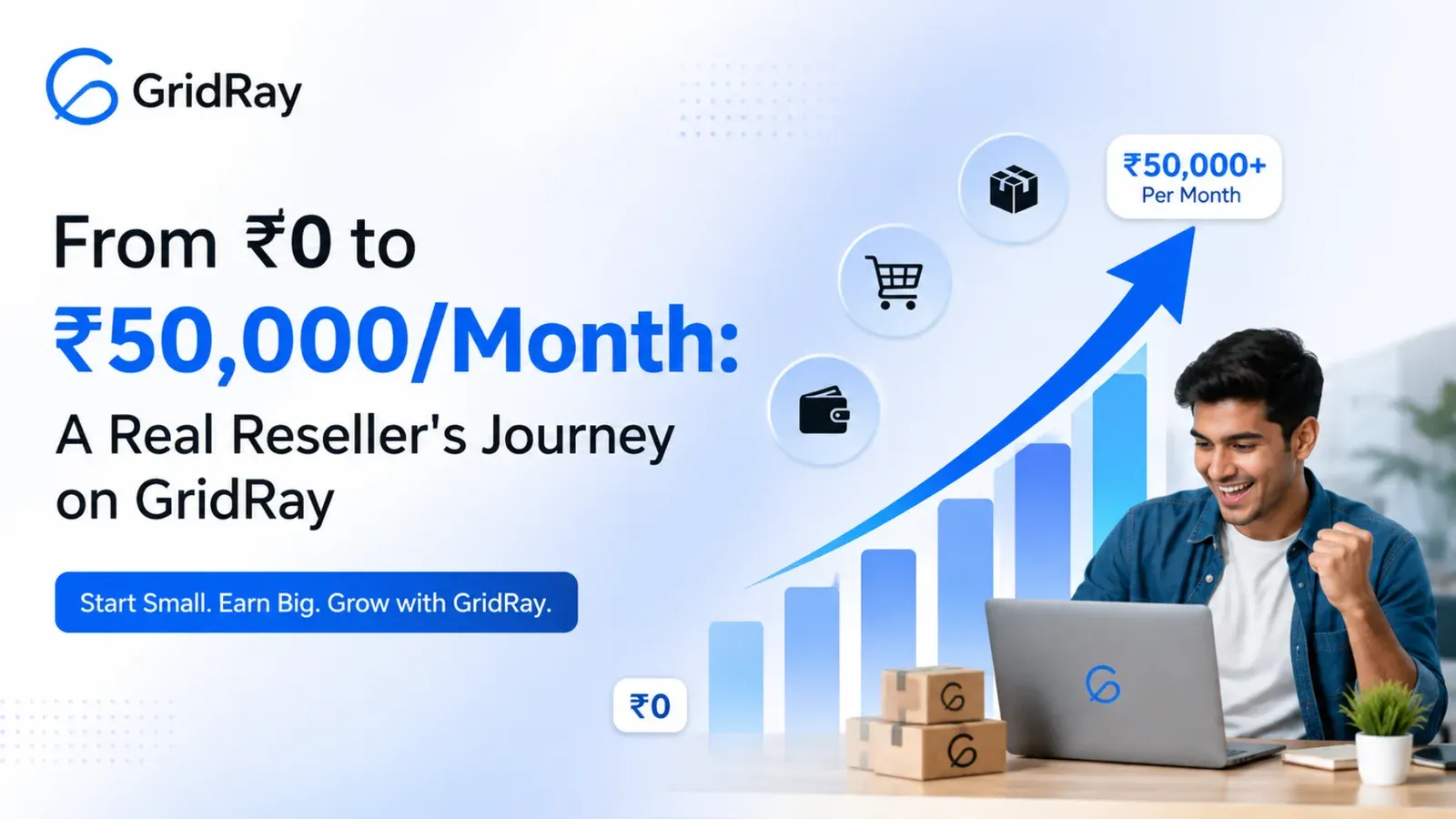
Today, that same page is her authorized storefront for two verified brands, and it brings in roughly ₹50,000 a month. No warehouse. No upfront stock. No supplier she’d never met sending her products she couldn’t vouch for.
This is her actual journey through GridRay — the registration, the approvals, the first sale, and what changed each month after. One reseller’s real numbers, not a promise of what yours will look like. Results depend on your channel, your effort, and how the brands you apply to price and stock their products.
We’re publishing the full timeline — including the slow first month, the fulfilment choices she made, and the mistakes she’d avoid a second time — because most “reseller success” content skips straight from ₹0 to the big number and leaves out everything that actually happened in between.
The Problem: An Audience, But Nothing Authorized to Sell
Ananya isn’t a total beginner — she’d been building her Instagram page for over a year before she touched GridRay. That’s an important distinction, because most reseller content assumes you’re starting from nothing. She wasn’t. She had an audience. What she didn’t have was a legitimate way to sell to it.
She’d looked at generic dropshipping suppliers first. The margins looked fine on paper, but she couldn’t verify where the products actually came from, return policies were vague, and she was one bad-quality shipment away from losing the trust she’d spent a year building with her followers. A few suppliers wouldn’t confirm which warehouse actually shipped their stock. One sent her a sample with packaging that didn’t match the product photos she’d been given to post. She never listed that one.
That experience is common among the sellers who end up looking at GridRay. It’s not usually the first thing they try — it’s what they switch to after a supplier relationship makes them nervous about their own account or their own audience’s trust.
That’s the gap GridRay is built for. GridRay is a B2B2C distribution network and authorization platform, not a marketplace — it exists for sellers, new or established, who want to sell verified, authorized brands without buying inventory upfront. The difference between that and what Ananya had tried before came down to one thing: every brand on GridRay reviews and approves resellers individually, on a specific channel, before that reseller can list anything. Nobody just shows up and starts selling.
Step 1–2: Registering and Getting Verified
Ananya registered on GridRay without a GST number — registration is open to everyone, GST or not. The profile step took the longest: she specified Instagram as her selling channel, uploaded the requested documentation, and signed the GridRay reseller agreement.
Verification took a few days. This step exists because whatever comes next — applications, approvals — depends on brands trusting that the profile in front of them is real.
Step 3–4: Applying to a Brand, and Waiting
Ananya applied to a fitness apparel brand and a nutrition supplements brand, both matched against her Instagram channel and follower profile. This part surprised her: the brand reviews your profile and your application — approval isn’t automatic just because you registered. One brand approved her within four days. The other took closer to two weeks and asked for more detail on her content style before approving.
This is where GridRay resets an expectation a lot of new resellers arrive with. GridRay doesn’t hand out orders — it gets you authorized to build a network on the channel you already work. The selling itself still happens on Ananya’s own Instagram page, to her own audience.
Step 5: What Showed Up After Approval
Once approved, Ananya received the same three things every approved reseller gets:
- An authorization letter, issued by GridRay on the brand’s behalf, confirming she was an official reseller for that brand on Instagram
- Product data with images — she didn’t have to shoot her own product photography to start listing
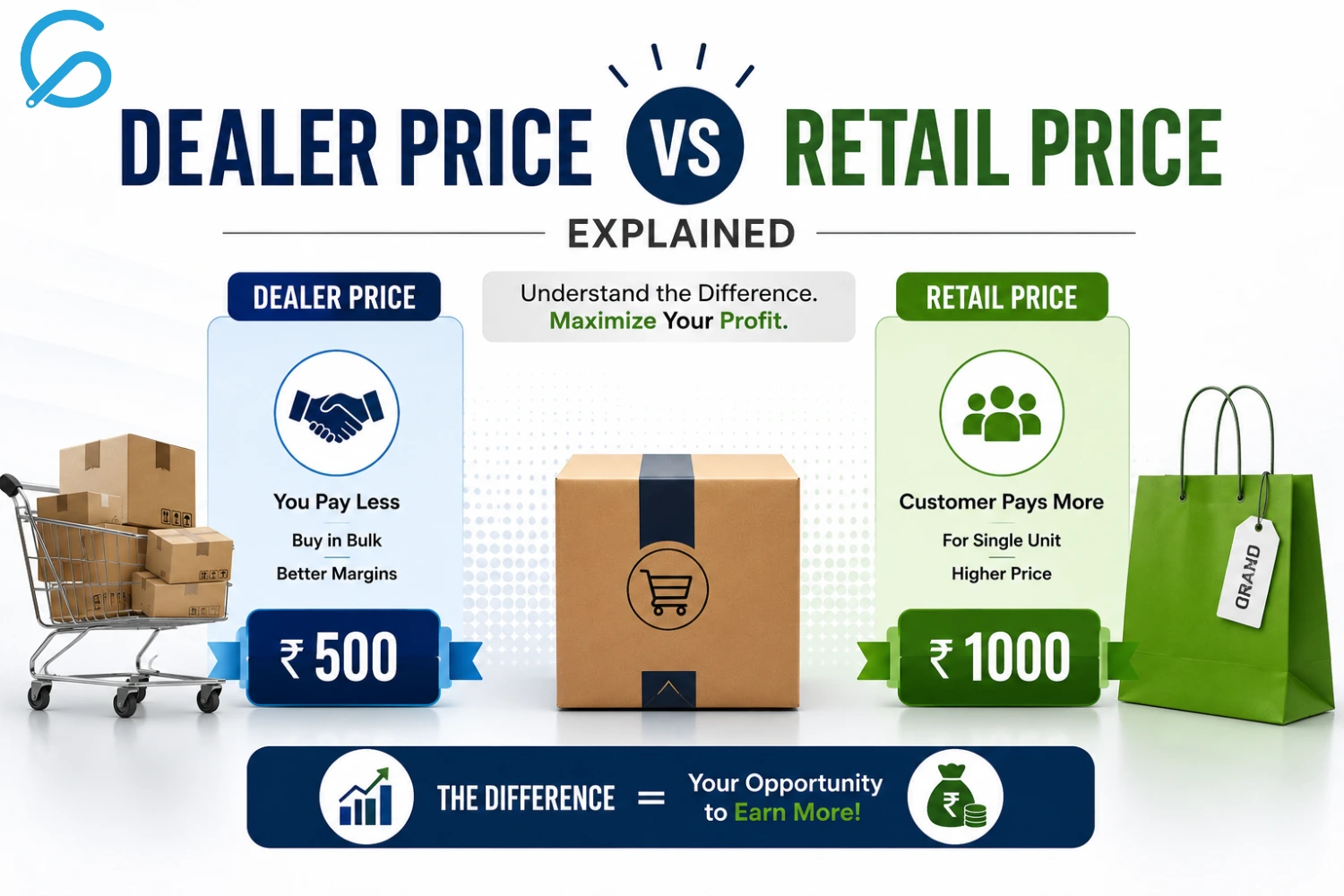
- The dealer price for each product — set by the brand, visible only to her as an authorized reseller
She set her own retail price on top of the dealer price. GridRay doesn’t set what she charges her followers, and the brand doesn’t either — that decision was hers.
How the Money Actually Moves
This is the part most reseller guides skip, and it confused Ananya at first: what actually happens between a customer paying her and the brand’s warehouse dispatching the order.
When a customer messaged her wanting to buy, she placed the order on GridRay and paid the dealer price plus the shipping cost for that order. GridRay holds that payment until the order is delivered and the return window closes — it doesn’t forward the money to the brand’s warehouse immediately. Once that window closes, GridRay settles with the brand’s warehouse, minus GridRay’s own commission. That commission comes out of what the brand receives, not out of what Ananya pays — she has no separate commission or payout relationship with GridRay beyond the dealer price and shipping she pays per order.
For her, in practice, it meant one thing: she never had to chase a warehouse for confirmation that her customer’s order was actually moving. GridRay held the money and the accountability until delivery was done.
The First 30 Days: ₹0 to Roughly ₹9,000
Ananya’s first month was slow. She posted product photos using the supplied images, priced conservatively while she learned what her audience would actually pay, and made eleven sales — most through Instagram DMs and story links.
Every order she placed on GridRay came with a GST-compliant invoice, issued by GridRay on behalf of the brand’s Order Processing Center. Dispatch was best-effort same-day for orders placed before 12pm noon — not every order made that cutoff, but most did.
She didn’t have to touch shipping logistics. GridRay managed it; she paid the shipping cost per order, on top of the dealer price, only for what she’d actually sold.
Why She Didn’t Need to Buy Stock First
GridRay is authorization-first, fulfilment-flexible — the brand’s authorization for your channel is required no matter what, but how you get product to the customer is your choice. There are three ways it typically works:
- Direct fulfilment (the default): You sell, place the order on GridRay, and the brand’s warehouse dispatches it. GridRay manages shipping; you pay the shipping cost. This is what Ananya used for every order in her first six months.
- FBA: You buy or source stock yourself, ship it to an Amazon FBA warehouse, and Amazon fulfils orders from there. This suits sellers whose whole business runs through Amazon.
- Self-ship: You buy stock in bulk and ship it yourself from your own location. This suits sellers with existing packing and dispatch infrastructure.
Ananya never touched FBA or self-ship. Instagram DMs and story links don’t need bulk stock sitting anywhere — direct fulfilment matched exactly how she was already taking orders.
Month 3–6: Scaling to ₹50,000
By month three, Ananya had a rhythm: weekly content around new arrivals, a pinned story highlight for her catalog, and enough order history that dispatch and returns stopped feeling unfamiliar. She added a second authorized brand in month four, in a related category, which gave her more to post without diluting her existing audience.
Returns did happen — a wrong size ordered, one customer who changed her mind after a story-link purchase. GridRay’s process handled the return logistics, but the cost of a non-defective return sat with Ananya, not the brand. The brand’s warranty only kicked in on products that arrived genuinely defective. That distinction mattered once she started pricing — she began building a small margin buffer into her retail price specifically to absorb the occasional return, instead of treating every sale as pure profit.
By month six, her monthly revenue across both brands settled around ₹50,000. She still hasn’t put a single rupee into inventory — no dead stock, no storage cost, no capital sitting on a shelf. What she does carry is the same thing every authorized reseller carries: her own marketing effort, her own customer support, and the shipping cost per order.
Her own numbers, not a template. A seller on a different channel, in a different category, with a different-sized audience, will get a different curve.
How This Compares to What She Almost Did Instead
Ananya’s near-miss with generic dropshipping suppliers is worth putting next to what she actually chose. Neither column below is Ananya-specific — this is how the two models generally compare for a reseller deciding between them.
| Traditional wholesale | Typical dropshipping | GridRay | |
|---|---|---|---|
| Upfront capital | ₹10L+ tied up in stock | Usually low, but risk shifts elsewhere | ₹0 — pay only after a sale |
| Dead stock risk | 20-30% typical loss | Low, but so is quality control | No inventory held, so no dead stock |
| Product authenticity | Depends on the supplier | Counterfeit risk, generic/unknown sourcing | Verified, authorized brands only |
| Dispatch | You handle it yourself | Often delayed, 7-15 days isn’t unusual | Best-effort same-day (orders before 12pm noon) from the brand’s warehouse |
| Pricing | Stable, but capital-heavy | Race-to-the-bottom pricing pressure | Stable dealer pricing set by the brand |
This is why she didn’t go back to the dropshipping suppliers once GridRay approved her: the authenticity problem that made her nervous in the first place was the one thing traditional wholesale and typical dropshipping didn’t actually solve for her.
Which Channels This Works On Beyond Instagram
Ananya built her ₹50,000 a month entirely on Instagram, but that’s a reflection of where her audience already was — not a limit on the platform. GridRay is designed to support almost every channel a reseller might already be selling on, including Amazon, WhatsApp, gifting sites, offline and community sales, and stores built on Shopify, WooCommerce, Zoho Commerce, Wix, or custom code. Each channel still needs its own brand authorization — approval on Instagram doesn’t automatically extend to a Shopify store you add later.
That’s the practical implication for anyone reading this with more than one selling channel already active: you can build the same kind of authorized-reseller income on whichever channel your audience already trusts you on, and apply for authorization on additional channels as you’re ready to expand.
Common Mistakes New Resellers Make
Ananya made a few of these herself before she settled into the rhythm that got her to ₹50,000:
- Applying to too many brands before posting a single product. She initially applied to four brands in her first week. Managing four approval timelines while posting nothing was more overhead than momentum.
- Pricing too low out of nervousness about her first sale. Her early retail prices barely covered the dealer price and shipping. It took a few weeks of testing to find prices her audience would actually pay without cutting her margin to nothing.
- Forgetting the shipping cost per order when pricing. The dealer price isn’t the only cost — shipping per order is hers to absorb into her retail price, and she didn’t account for it in her very first pricing pass.
- Expecting instant approval. She assumed registering meant she could start selling that week. Verification and brand review both took real time, and treating that timeline as a delay rather than a normal part of the process would have been discouraging.
- Treating it like dropshipping. Customer support, return handling on her end, and consistent posting were still her job. GridRay removed the inventory and authenticity risk — it didn’t remove the work of running a storefront.
What Ananya Would Tell a New Reseller
- Verification and brand approval take real time. Budget for it instead of expecting instant access.
- Dealer price isn’t your retail price. You still have to decide what your audience will pay, and that takes testing.
- Established sellers aren’t at a disadvantage here. GridRay didn’t replace her audience-building work — it gave her something legitimate to point that audience toward.
- Zero inventory doesn’t mean zero cost. Shipping per order, marketing, and customer support are still yours to handle.
- Start with one brand you can post consistently for, not four you can barely keep up with. A second brand is easier to add once the first one has a rhythm.
- Build a small buffer for returns into your pricing. Not every sale is pure margin — the occasional non-defective return is yours to absorb, and pricing that in early avoids a nasty surprise later.
- Apply for authorization on a new channel before you start posting there. Approval doesn’t transfer automatically from one channel to another.
Frequently Asked Questions (FAQs)
Is GridRay a marketplace that sends me orders?
No. GridRay is a B2B2C distribution network and authorization platform, not a marketplace. It gets you authorized to sell a brand’s products — the actual selling still happens on your own channel, like Ananya’s Instagram page, to your own audience.
Do I need a GST number to register as a reseller?
No. Registration on GridRay is open to everyone, with or without a GST number. You’ll still need to complete your profile and get verified before you can apply to brands.
Who decides the price I sell at?
The brand sets the dealer price — what you pay per unit as an authorized reseller. You set your own retail price on top of that. GridRay doesn’t control either number.
How fast does GridRay dispatch orders?
Dispatch is best-effort same-day for orders placed before 12pm (noon) from the brand’s warehouse. It’s not guaranteed for every order, but it’s the standard GridRay works toward.
Will I make ₹50,000 a month like Ananya did?
There’s no way to promise that, and GridRay doesn’t commit to specific income or margin figures for any reseller. Ananya’s numbers came from her channel, her audience size, her category, and six months of consistent effort. Your results will depend on the same variables for you.
Is GridRay only for people starting from zero, or can established sellers use it too?
Both. GridRay is built for new entrepreneurs and for sellers who already have an audience or an active selling channel and want formal brand authorization for what they’re already doing.
What do I actually receive once a brand approves my application?
Three things: an authorization letter (issued by GridRay on the brand’s behalf), product data with images so you don’t have to shoot your own, and the dealer price for that brand’s products.
Who pays for a return — me, the brand, or GridRay?
GridRay’s process handles the logistics of a return, but the cost of a non-defective return (wrong size, changed mind) sits with you as the reseller. The brand’s warranty applies only to products that arrive genuinely defective.
Do I need to buy stock before I can start selling?
Not with direct fulfilment, which is the default model. You place the order on GridRay only after a customer has already bought from you, and the brand’s warehouse dispatches it. Buying stock upfront only applies if you choose the FBA or self-ship fulfilment routes instead.
Can I sell the same brand’s products on more than one channel?
Only on channels the brand has authorized you for. If you’re approved on Instagram and want to start selling on Shopify or Amazon too, that’s a separate authorization you’d need to apply for on that channel.
Conclusion
Ananya’s ₹50,000-a-month number isn’t a GridRay promise — it’s what six months of consistent listing, customer support, and channel-building looked like for one authorized reseller on Instagram. The five-step process behind it — register, complete your profile, apply to a brand, get reviewed, and start selling on your own channel — is the same for every reseller, whether you’re starting fresh or formalizing an audience you’ve already built.
What made the difference for her wasn’t a hack or a shortcut — it was picking a model where the authenticity risk was solved before she posted a single product, and where the only real work left was the work she already knew how to do: showing up for her audience, consistently, on the channel where they already trusted her.
Read next: How to Become an Authorized Brand Reseller in India for the full registration and application process, or GST Compliance for Online Sellers if you’re weighing GST registration before you apply.