Every brand distribution conversation eventually hits the same wall: how do you reach more resellers without losing control of who sells your products, where, and at what price?
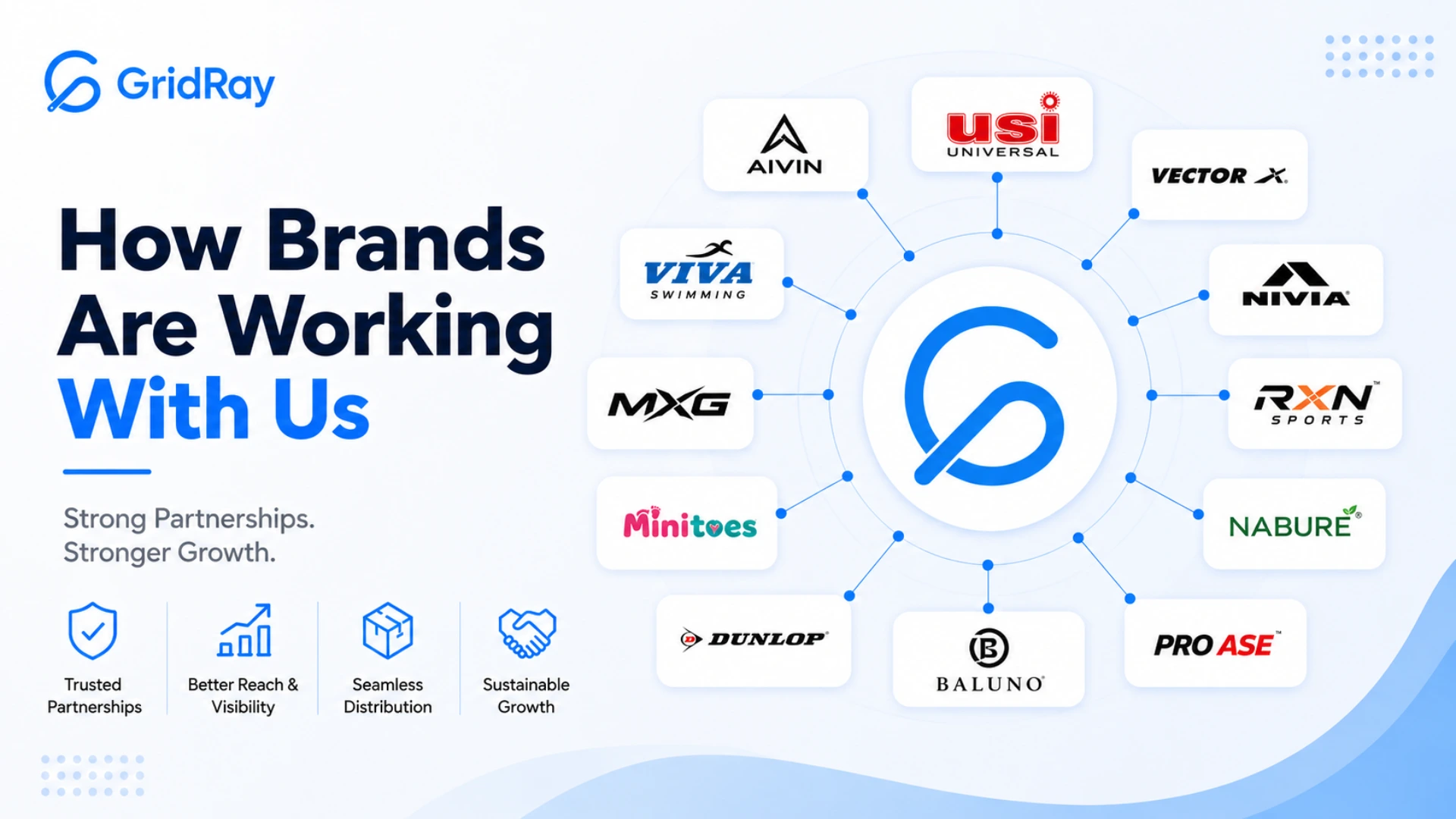
That’s the question GridRay was built to answer. Brands across Sports & Fitness, Lifestyle & Wellness, Electronics & Accessories, Fashion & Apparel, Home & Kitchen, Beauty & Personal Care, Kids & Toys, and Outdoor & Adventure already run their reseller networks through GridRay. Here’s exactly how that partnership works — from the brand’s side of the table.
GridRay Is Network Building, Not a Marketplace
The first thing every brand needs to understand: GridRay is not a marketplace. GridRay is network building.
A marketplace gives you orders. GridRay gives you a network — resellers who apply, get approved by you, and then sell on the channels you’ve authorized. Selling happens on the reseller’s own Instagram, WhatsApp, D2C store, or marketplace listing — not on GridRay itself.
This matters because it sets the right expectation upfront. Results build over time as your authorized network grows and starts selling, the same way any distribution network compounds — not the instant order volume a marketplace listing might promise.
What the Brand Actually Controls
When a brand partners with GridRay, three things stay entirely in the brand’s hands:
Who gets authorized. Every reseller who applies to sell your products goes through your approval. GridRay facilitates the process — verifying profiles, matching applications to your criteria — but the brand reviews the profile and the application, and the brand decides who gets in.
Which channels they sell on. A reseller might be approved for Instagram but not Amazon. Another might be approved only for their own D2C store. Every new channel a reseller wants to add requires a fresh authorization from the brand. Nothing sells anywhere by default.
Dealer price. The brand sets the dealer price. Resellers set their own retail price on top of it. Brands can also suggest a Minimum Advertised Price to protect offline partner investments — a suggestion, not a platform-enforced lock.
Learn how brands control distribution across India →
The Partnership, Step by Step
Here’s what the process looks like once a brand comes on board:
- Catalog and dealer price go live. The brand shares product data — images, descriptions, specs — and sets dealer pricing. Resellers only ever see this catalog after they’re approved.
- Resellers apply. Anyone interested in reselling the brand registers on GridRay, completes a verified profile, and applies — specifying exactly which channel(s) they intend to sell on.
- The brand reviews and decides. The brand reviews the reseller’s profile and application against its own criteria, then approves or declines.
- Approved resellers get authorized. GridRay issues the authorization letter on the brand’s behalf, confirming the reseller is officially approved on their chosen channel.
- Orders start flowing through the network. A reseller lists the brand’s products on their authorized channel, a customer orders, and GridRay coordinates fulfilment from the brand’s warehouse — with a GST-compliant invoice issued on behalf of the brand’s Order Processing Center on every order.
This is the same journey resellers go through when applying to any brand on GridRay — see it from Nivia’s authorized reseller page for a live example of what a brand-specific catalog and approval flow looks like from the reseller’s side.
What Brands Get Out of the Partnership
A network that grows without capital risk on either side. Resellers pay dealer price plus shipping only after a customer has already ordered — GridRay holds those funds in escrow until the order is delivered and the return window closes, then settles with the brand’s warehouse. Stock moves on demand instead of sitting with distributors who may or may not sell it.
Full visibility into who’s selling and where. Because every reseller is individually authorized by channel, brands can see exactly which resellers are active, on which platforms, at any point — something traditional multi-tier wholesale rarely offers.
Protection against unauthorized listings. When every legitimate reseller sources through an authorized channel, there’s no legitimate stock left for grey-market sellers to draw from. See how this shuts down counterfeit listings on Amazon →
Reach into tier-2 and tier-3 markets. Resellers operate digitally and don’t need to carry inventory, so a reseller in any city can list and sell a brand’s products on an authorized channel without the brand needing a local warehouse or a new distribution appointment.
Existing distributors stay in the picture. GridRay doesn’t compete with a brand’s existing distribution — established distributors and dealers are fulfillment partners, not competition, and can be brought into the same authorized structure.
Onboarding without the headcount cost. Vetting reseller applications, verifying profiles, matching channel requests, and issuing authorization letters is operational work most brand teams don’t have spare capacity for. GridRay handles that layer, so the brand’s own team only has to make the approve/decline call.
How This Compares to Traditional Distribution
Brands usually reach this decision after running into the limits of one of two existing models.
Traditional multi-tier wholesale means shipping bulk stock to a distributor, who sells to dealers, who sell to whoever they find next. Visibility ends the moment stock leaves the warehouse — the brand has no way to see or control who resells further down the chain, at what price, or on which platform. How brands lose control of distribution this way →
Listing directly on a marketplace solves reach but not control. Brands often can’t restrict which third-party sellers list their products, pricing races toward the bottom, and grey-market stock creates room for counterfeit or unauthorized listings under the brand’s name.
GridRay is built for selective distribution — the middle path most brands actually want. Every reseller in the network, at every tier, is individually authorized by channel. The brand keeps dealer-price control and full visibility, without needing a distributor layer it can’t see through or a marketplace listing it can’t restrict.
A Real Example: How This Plays Out for a Brand
Consider a mid-sized brand with a strong offline dealer network that had never found a clean way to extend that reach online without losing control of pricing or brand presentation. Every reseller who wanted to sell online had to be individually vetted and authorized — no exceptions. Offline dealers weren’t cut out of the shift either; they were brought in as authorized partners who could also fulfil online demand.
The result: a single brand-approved network spanning both offline and online channels, with every reseller traceable and every listing accounted for — including a 40-50% reduction in stock-outs and 2-3x faster dealer onboarding once the network was in place. Read the full case study →
Getting Started as a Brand
Partnering with GridRay doesn’t require rebuilding how a brand already operates. The process is straightforward:
- Share your product catalog and set your dealer pricing
- Define your channel policy — which platforms you’re comfortable authorizing resellers on
- Set your approval criteria for who gets into your network
- Review and approve reseller applications as they come in
GridRay handles onboarding logistics, order coordination, invoicing, and fulfilment support from there — so the brand’s team stays focused on approving the right resellers and setting the right terms, not managing operational overhead.
Frequently Asked Questions
Does partnering with GridRay mean giving up control of my brand?
No — it’s the opposite. You approve every reseller, decide which channels they can sell on, and set your own dealer price. GridRay facilitates the process; the brand makes every decision.
Who actually approves resellers — GridRay or the brand?
The brand does. GridRay verifies profiles and matches applications against your criteria, but every reseller is reviewed and approved (or declined) by you.
Is this the same as listing on a marketplace?
No. A marketplace sends you orders. GridRay is network building — resellers apply, you approve them, and they sell on their own channels. There’s no guarantee of instant order volume; the network compounds over time as it grows.
Do I have to pay anything upfront to onboard?
No. You share your catalog and set dealer pricing — there’s no upfront fee to list your brand. Resellers pay dealer price plus shipping only after a customer has already ordered, and GridRay holds those funds in escrow until the order is delivered and the return window closes before settling with you.
Can I keep working with my existing distributors and dealers?
Yes. Existing distributors and dealers are fulfillment partners, not competition — they can be brought into the same authorized structure alongside new resellers.
What if I only want resellers selling on specific channels?
You define channel policy per reseller. A reseller can be approved for Instagram but not Amazon, for example, and adding any new channel requires a fresh authorization from you.
How do I get paid?
GridRay settles with your warehouse after each order is delivered and the return window closes, minus GridRay’s commission. Commission is charged to the brand — resellers have no payout relationship with GridRay.
What happens if a reseller violates my authorization terms?
That’s the brand’s call. Non-performing resellers may simply not be renewed. Fraud or policy violations can have authorization revoked immediately — the brand isn’t locked into a reseller relationship that isn’t working.
Can I bring my existing sellers onto GridRay, or does it only work for new resellers?
Both. Sellers who already work with your brand can register and apply the same way new resellers do — the process authorizes anyone who meets your criteria, regardless of whether they were selling your products before.
Conclusion
Brands don’t need to choose between reach and control. GridRay’s model keeps every decision — who’s authorized, which channels they sell on, and what dealer price they pay — with the brand, while GridRay handles the reseller onboarding, fulfilment coordination, and invoicing underneath it. What brands get in return is a distribution network that grows without inventory sitting idle, without unauthorized sellers eating into brand equity, and without losing visibility into who’s selling their products and where.
Ready to build your own authorized reseller network? Partner with GridRay → and start approving resellers on your terms.