Every online seller hits this fork in the road early: sell whatever’s cheap and easy to source, or sell products people already recognize and trust. Both are real strategies. Both have real trade-offs.
This guide compares generic product selling and branded product selling head-to-head — so you can decide which fits the business you’re actually trying to build.
What Generic Product Selling Means
Generic product selling means listing unbranded or white-label products sourced from anonymous suppliers — usually with no verified origin, no authorization, and no brand identity attached. The product itself carries no story and no track record with the customer.
Where it’s strong: the catalog is effectively unlimited. You can test dozens of products across niches in days, at whatever price point you want, without waiting on anyone’s approval.
Where it struggles:
- No repeat trust. Since the product has no identity, every sale starts the trust-building process from zero. A customer who liked what they bought has no brand to come back to — only your store, which they may not remember.
- Price wars. If you can list a generic item, so can thousands of other sellers listing the identical product. Margins get squeezed as more sellers pile onto the same SKU.
- Inconsistent quality. Without a brand standard behind the product, quality varies supplier to supplier, and sometimes batch to batch — driving up returns.
- No marketing support. There’s no official product photography, no brand story, no existing search demand to borrow from. You’re building content and demand from scratch, every time.
What Branded Product Selling Means
Branded product selling means listing products under a recognized brand name, as an authorized reseller for that brand on that specific channel. This is different from simply “buying and reselling something with a logo on it” — it means the brand has reviewed and approved you to sell it, on the channel you specified.
On GridRay, this happens through channel-specific authorization:
- Register — open to everyone, with or without a GST number.
- Complete your profile — specify which channel(s) you sell on (Instagram, Amazon, WhatsApp, your own store, offline, and more), get verified, and sign the GridRay reseller agreement.
- Apply to a brand, specifying the channel you want to sell on.
- The brand reviews your profile and application and approves or declines based on their own criteria.
- On approval, you receive: an authorization letter (issued by GridRay on the brand’s behalf), product data with images, and dealer price — set by the brand. You set your own retail price independently.
Every order also comes with a GST-compliant invoice, issued by GridRay on behalf of the brand’s Order Processing Center (OPC).
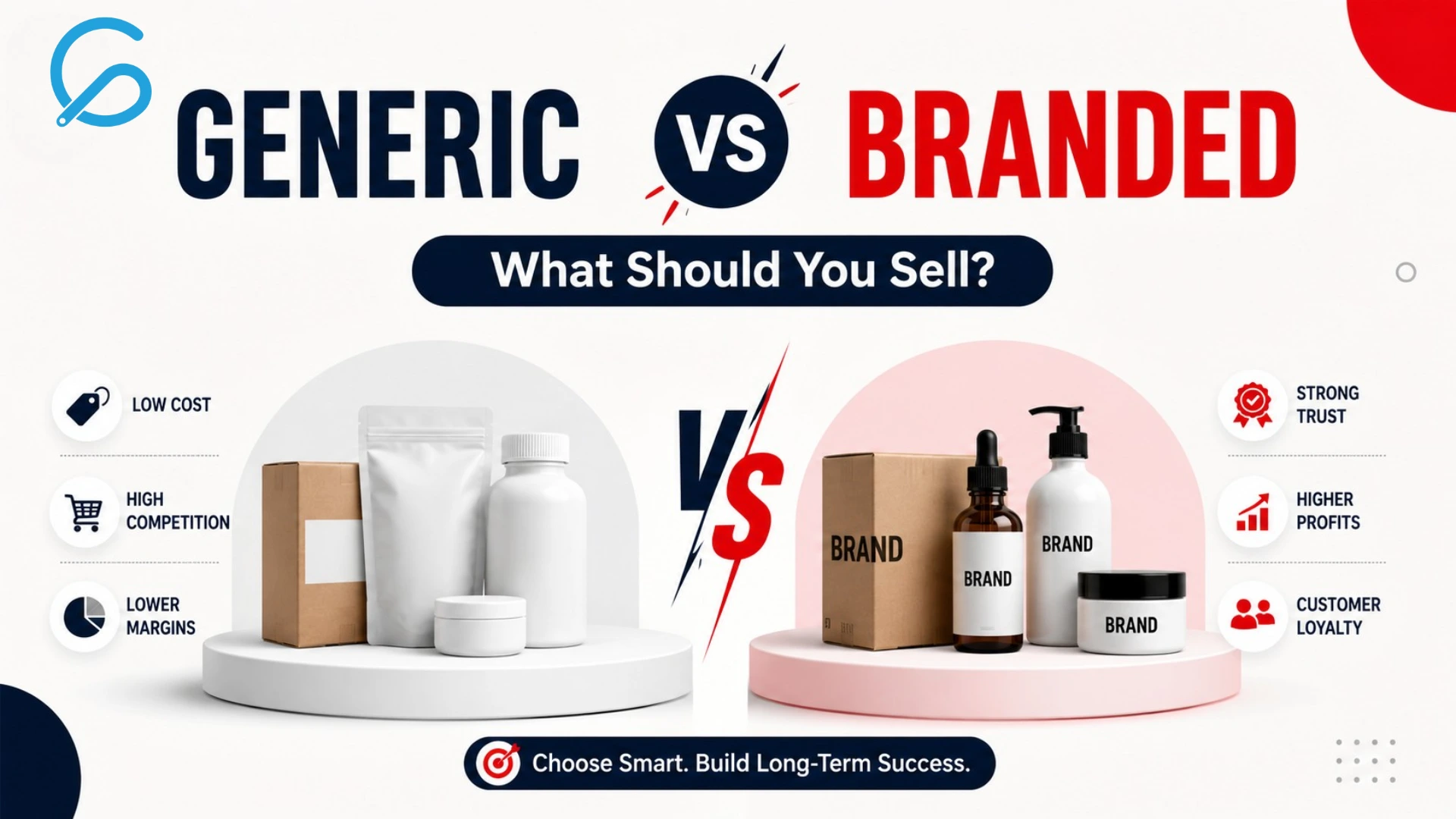
Generic vs Branded: Side by Side
| Factor | Generic Product Selling | Branded Product Selling (Authorized Reseller) |
|---|---|---|
| Product identity | No brand recognition — trust rebuilt from zero each time | Recognized brand name — some trust exists before you say a word |
| Pricing | Anyone can list the same item — price wars are common | Brand sets dealer price; you set your own retail price independently |
| Quality consistency | Varies by anonymous supplier, hard to verify upfront | Set and maintained by the brand across every order |
| Supply | Unverified origin | Brand-verified supply |
| Marketing content | None — no official photography or brand story to use | Brand-provided product data (images, descriptions, specs) to build on |
| Catalog breadth | Very wide — easy to test many products fast | Curated by category — fewer SKUs, but each has an existing market |
| Repeat customers | Hard to earn without a differentiated product | Easier — customers return to brands they already trust |
| Channel authorization | Not applicable | Required per channel — a new channel means a new authorization request |
Where Generic Selling Still Makes Sense
It’s not one-sided. If you’re purely testing demand for a niche before committing to it, generic products let you experiment fast and cheap — you’re not waiting on a brand’s approval to list something. That speed has real value early on.
The trade-off is that speed doesn’t compound. Every generic product you test starts from zero trust and zero search demand. Branded selling trades some of that speed for a product that already has both.
How Branded Selling Actually Works Day to Day
Once you’re authorized, selling branded products through GridRay’s direct fulfilment model works like this: you list the product on your channel, a customer orders from you, you place the order on GridRay at dealer price, and the brand’s warehouse dispatches it — typically same day for orders placed before 12pm (noon), on a best-effort basis. GridRay manages the shipping; you pay the shipping cost per order.
There’s no inventory to buy and no storage cost. You still handle your own marketing, the shipping cost per order, and customer support — returns and exchanges are managed by GridRay.
This is different from typical dropshipping in one key way: the products are verified and brand-authorized, not sourced from an anonymous, unverified supplier.
Who This Is For
Both generic and branded selling attract the same range of sellers — D2C store owners on Shopify or WooCommerce, social commerce sellers on Instagram and WhatsApp, marketplace sellers on Amazon and Flipkart, and community partners like coaches, gyms, and clubs selling to their own audience. The difference isn’t who’s selling — it’s what they’re selling, and how much of that trust-building work they’re willing to redo with every new product.
This applies equally whether you’re an established seller looking to formalize what you already do, or a new entrepreneur building from day one — GridRay’s authorization model works for both.
Which Should You Actually Sell?
If you’re stress-testing a brand-new niche and speed matters more than trust right now, generic products give you that speed. If you’re building something meant to keep customers coming back — a store, a channel, a community following you already have — branded products do the trust-building for you before the first sale even happens.
You built the trust with your audience. Branded selling lets a recognized name back that trust up, instead of asking you to build brand credibility from a product with no name at all.
Frequently Asked Questions
Is generic product selling the same as dropshipping? They overlap heavily. Generic product selling usually means sourcing unbranded goods from anonymous suppliers — which is what most people mean by “dropshipping.” Typical dropshipping carries the generic-supply risk described above; authorized reselling of verified brands does not.
Do I need a GST number to become an authorized reseller on GridRay? No. Registration is open to everyone, with or without a GST number.
How much margin can I expect selling branded products? GridRay doesn’t set or promise margins. The brand sets the dealer price, you set your own retail price, and your earnings depend entirely on your own sales performance.
Can I sell branded products on any channel I want? No. Authorization is channel-specific. If you want to sell on a new channel beyond what you were originally approved for, that requires a new authorization request to the brand.
Does GridRay carry generic products? No. GridRay’s catalog consists of verified, authorized brands across categories like Sports & Fitness, Lifestyle & Wellness, Electronics & Accessories, Fashion & Apparel, and more — not unverified generic supply.
Ready to sell products people already trust? Browse the product catalog or start your application with GridRay.